
When you’re running a manufacturing business, there’s always going to be something demanding your immediate attention. A staffing issue needs to be addressed, a customer order needs to ship, cash flow needs to be managed, equipment needs maintenance… the list goes on.
At the same time, there are big-picture questions that can’t be ignored: What direction will the company be taking in one year, five years, and ten years? Where will your next employees come from? What opportunities can you take to diversify your customer base? What investments should you make to keep your business competitive?
For your business to operate successfully in both the short and long run, you need to make room for both. A five-year plan doesn’t mean much if today’s problems are putting the business at risk. At the same time, constantly prioritizing what needs to happen this week can leave a company without a clear path forward.
Short-Term Priorities Keep the Business Moving
Short-term planning encompasses much of what goes into running a manufacturing business every day. That includes:
- Cash flow
- Revenue
- Staffing
- Customer demands
- Operational efficiency
- Production schedules
- Immediate equipment or facility needs
These priorities are difficult to ignore because they have immediate impacts. If you’re short-staffed, for example, you have to address that problem before you can think about what your workforce will look like five years from now.
The danger comes when every decision becomes a short-term decision. If a busy production schedule means training always gets pushed back, or a strong month of orders means investments in new technology are postponed indefinitely, those choices can eventually create problems of their own. Staying busy today doesn’t necessarily mean you’re prepared for what comes next.
Long-Term Planning Builds Business Longevity
Long-term goals require a different kind of discipline because the payoff isn’t immediate. Examples include:
- Workforce development
- Succession planning
- Technology investments
- Marketing efforts
- Customer diversification
- Participation in programs and associations that help build a future talent pipeline
Consider a manufacturer that makes an active effort to engage with its local community to introduce young people to manufacturing. The company may not see an immediate return from that effort, and those people may be years away from entering the workforce, but that doesn’t make the investment any less valuable. It’s an investment in the future workforce and the long-term health of the business.
The same can be said about marketing. You may not see a new customer immediately after sharing an article or social media post, but those efforts can build awareness and relationships that lead to new opportunities and revenue over time.
Strike the Right Balance of Short-Term and Long-Term Goals
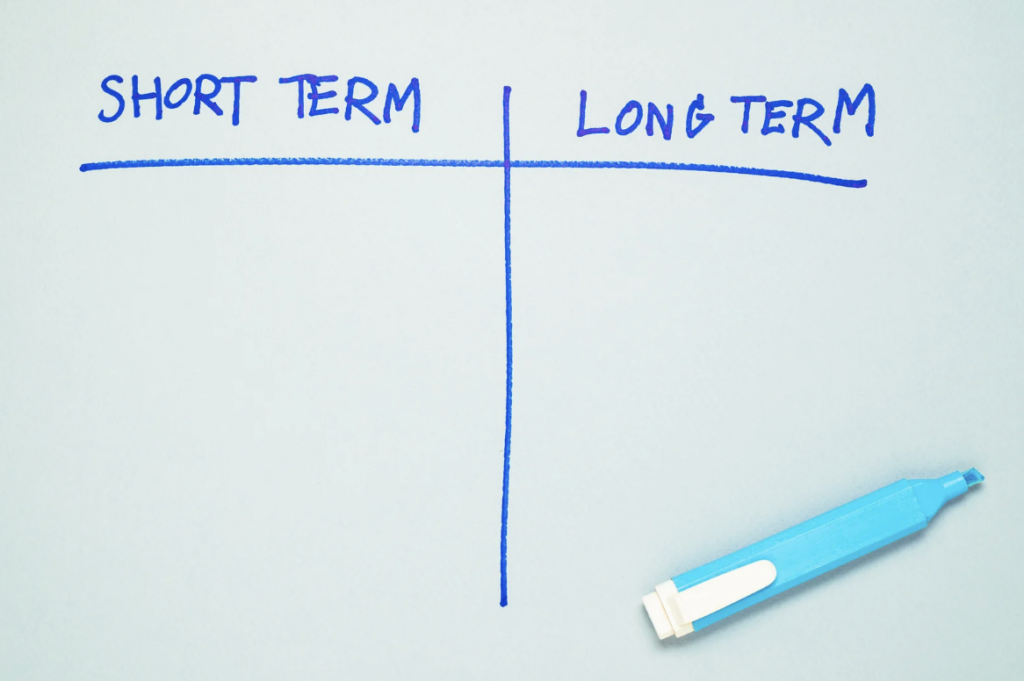
The strategies that will set the tone in your shop this week shouldn’t be competing with the ones that will impact your business years down the line. They should work together.
The best long-term strategy is one that can survive the short-term realities of running a business. If something is going wrong in the shop today, it certainly needs attention. But a problem today shouldn’t automatically push aside the investments that will help you prepare for tomorrow.
Keep Your Employees in the Know
Balancing short- and long-term priorities also requires communication. Employees should understand what the company is trying to accomplish right now and where the business is ultimately headed. When your people understand both sets of goals, they can make better decisions about how their work contributes to the bigger picture.
This level of transparency also helps team members understand why certain investments are being made. A training program or new software system may not seem directly connected to today’s production schedule, but it can make more sense when employees understand how it fits into the company’s long-term plans.
How NTMA Can Support This Balancing Act
NTMA offers resources that can help manufacturers address immediate challenges while continuing to build for the future.
Workforce development is a good example of this. NTMA-U provides training that can help employees develop skills they need today, while building a stronger workforce for the years ahead.
Events such as Engage can also provide long-term value. For many attendees, taking time away from the shop to attend a conference is an investment in the future of the business. The ideas, knowledge, and relationships gained can influence decisions long after the event ends.
NTMA Executive Cohorts offer another opportunity to balance both perspectives. Manufacturers can share how they are handling immediate challenges while also learning how their peers are approaching larger business and leadership questions. Members can have similar conversations outside of the program through NTMA Connect, the association’s online portal.
These resources give manufacturers opportunities to address what’s in front of them while continuing to invest in what comes next. Don’t get caught up in the chaos of your day-to-day; engage with your NTMA community to invest in your company’s future.